
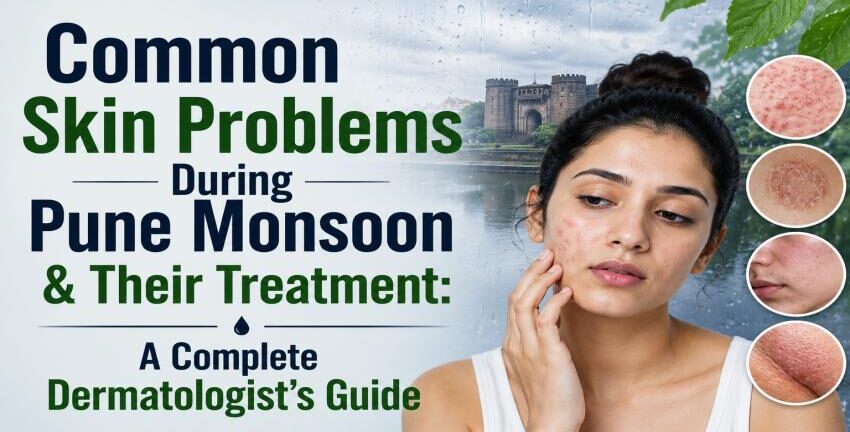
The arrival of monsoon in Pune brings much-needed relief from the summer heat. However increased humidity, frequent rainfall, excessive sweating and damp surroundings can create the perfect conditions for common skin problems during Pune Monsoon. From fungal infections and acne breakouts to skin allergies and hair fall, monsoon often triggers concerns that can affect people of all ages.
Understanding the most common skin problems during monsoon and taking preventive measures can help keep your skin healthy throughout the season. In this guide Dr. Ruchi Bhirud – Dermatologist and Aesthetic Surgeon Skin & Hair Specialist Pune explains the most common monsoon skin issues, their causes, prevention tips and available treatment options.
Why Do Common Skin Problems During Pune Monsoon Increase?
Pune’s monsoon season is characterized by high humidity levels, fluctuating temperatures and prolonged moisture exposure. These conditions encourage the growth of bacteria, fungi and other microorganisms that can affect skin health.
Common factors responsible for monsoon skin problems include:
- Increased humidity leading to oily skin
- Excess sweating and clogged pores
- Damp clothing and footwear
- Fungal and bacterial growth
- Weakened skin barrier function
- Increased exposure to allergens
As a result, many people experience skin infections, acne flare-ups, itching, rashes and scalp problems during the rainy season.
1. Fungal Infections During Monsoon:
Fungal infections are among the most common skin problems during Pune monsoon. Warm and moist environments allow fungi to thrive, especially in areas where sweat accumulates.
Common Types of Fungal Infections:
- Ringworm (Tinea)
- Athlete’s Foot
- Jock Itch
- Fungal infections in skin folds
Symptoms:
- Persistent itching
- Circular red patches
- Peeling skin
- Burning sensation
- Discoloration
Prevention Tips:
- Keep your skin dry
- Change wet clothes immediately
- Avoid sharing towels
- Wear breathable cotton clothing
- Use antifungal powders if recommended
Treatment:
Fungal Infection Treatment in Pune, Mild infections may respond to antifungal creams, but recurrent or widespread infections often require medical treatment. Early diagnosis can prevent the infection from spreading.
2. Acne and Pimples During Monsoon:
Many people notice increased acne breakouts during the rainy season. High humidity causes excess oil production, which can clog pores and trigger acne flare-ups.
Why Acne Worsens During Monsoon?
- Increased oil secretion
- Sweat accumulation
- Dirt and pollution buildup
- Frequent touching of the face
Prevention:
- Wash your face twice daily
- Use non-comedogenic skincare products
- Avoid heavy creams
- Stay hydrated
Treatment Options:
Depending on the severity of Acne Treatment may include topical medications, chemical peels, acne management programs, and dermatologist-guided skincare routines.
3. Oily Skin and Clogged Pores:
Humidity stimulates the sebaceous glands, resulting in oily skin. Excess oil combines with sweat and environmental pollutants, leading to clogged pores and dull skin.
Signs of Oily Skin During Monsoon:
- Greasy appearance
- Enlarged pores
- Frequent blackheads
- Acne breakouts
Skincare Tips:
- Use a gentle cleanser
- Avoid over-cleansing
- Choose lightweight moisturizers
- Apply oil-free sunscreen
A balanced skincare routine can help maintain healthy skin without stripping away natural moisture.
4. Skin Allergies and Rashes:
Skin allergies are another common concern during monsoon. Exposure to damp environments, allergens, fungal growth, and insect bites can trigger allergic reactions.
Symptoms:
- Redness
- Itching
- Swelling
- Skin rashes
- Irritation
Common Triggers:
- Damp clothing
- Mold exposure
- Cosmetic products
- Environmental allergens
Treatment:
Treatment depends on the underlying cause and may include anti-allergic medications, topical creams, and lifestyle modifications.
5. Eczema Flare-Ups During Monsoon:
People with eczema often experience flare-ups during humid weather. Sweat and moisture can irritate sensitive skin and trigger inflammation.
Symptoms:
- Dry patches
- Intense itching
- Redness
- Skin cracking
Management Tips:
- Moisturize regularly
- Avoid harsh soaps
- Wear breathable fabrics
- Maintain proper skin hygiene
Consulting a dermatologist can help prevent recurring flare-ups and reduce discomfort.
6. Psoriasis and Monsoon Weather:
While some individuals experience relief from psoriasis during monsoon due to improved hydration, others may notice worsening symptoms because of infections and humidity-related irritation.
Common Symptoms:
- Thick, scaly patches
- Redness
- Itching
- Skin discomfort
Proper treatment and regular follow-up with a dermatologist can help manage psoriasis effectively throughout the season.
7. Heat Rash and Sweat Rash:
Despite cooler temperatures, excessive sweating can still lead to heat rash during monsoon.
Causes:
- Blocked sweat ducts
- Tight clothing
- Excess moisture
Symptoms:
- Small red bumps
- Itching
- Prickling sensation
Prevention:
- Wear loose-fitting clothes
- Stay cool and dry
- Avoid excessive sweating
Most cases improve with proper skincare and hygiene practices.
8. Bacterial Skin Infections:
Moisture and humidity can increase the risk of bacterial skin infections.
Common Conditions:
- Folliculitis
- Impetigo
- Cellulitis
Symptoms:
- Red bumps
- Painful skin lesions
- Pus formation
- Swelling
Prompt medical attention is important to prevent complications and spread of infection.
9. Dry and Dull Skin During Monsoon:
Many people assume humidity prevents dry skin. However, frequent washing, environmental changes, and improper skincare can cause skin dehydration.
Signs:
- Lack of glow
- Rough texture
- Tightness
- Flaky skin
Solutions:
- Use gentle cleansers
- Apply lightweight moisturizers
- Drink plenty of water
- Avoid harsh skincare products
Hydrated skin appears healthier and more radiant during monsoon.
10. Monsoon Hair Fall and Scalp Problems:
Monsoon doesn’t just affect the skin; it can also impact scalp health.
Common Hair Concerns:
- Increased hair fall
- Dandruff
- Itchy scalp
- Scalp fungal infections
Prevention Tips:
- Keep the scalp clean
- Avoid prolonged moisture exposure
- Use mild shampoos
- Maintain a balanced diet
Professional evaluation may be necessary if hair fall becomes excessive or persistent.
Monsoon Skin Care Routine Recommended by Dermatologists:
A simple skincare routine can go a long way in preventing monsoon-related skin issues.
Morning Routine:
- Gentle face cleanser
- Antioxidant serum
- Lightweight moisturizer
- Broad-spectrum sunscreen
Night Routine:
- Remove dirt and excess oil
- Cleanse thoroughly
- Apply prescribed skincare products
- Use a suitable moisturizer
Consistency is key to maintaining healthy skin during the rainy season.
Monsoon Skin Care Mistakes to Avoid:
Common skin care mistakes that everyone makes, Avoiding these habits can significantly reduce the risk of skin issues.
Many skin problems arise due to common mistakes such as:
- Skipping sunscreen on cloudy days
- Wearing damp clothes for long periods
- Overwashing the face
- Using heavy oily products
- Ignoring early signs of infection
When Should You Consult a Dermatologist?
You should seek professional help if you experience:
- Persistent itching
- Recurrent fungal infections
- Severe acne breakouts
- Unexplained rashes
- Sudden hair fall
- Skin infections that do not improve
Early diagnosis often leads to faster recovery and prevents complications.
Why Choose Dr. Ruchi Bhirud for Monsoon Skin Care in Pune?
Monsoon skin problems often require personalized care rather than self-medication. Dr. Ruchi Bhirud (Jawale) – Dermatologist and Aesthetic Surgeon | Skin & Hair Specialist Pune provides comprehensive evaluation and customized treatment plans for various skin and hair concerns.
Patients benefit from:
- Personalized treatment recommendations
- Advanced dermatology solutions
- Evidence-based care
- Comprehensive skin and hair management
Conclusion:
Monsoon weather in Pune can increase the risk of fungal infections, acne, allergies, oily skin, hair fall and other skin concerns. Maintaining good hygiene, following a proper skincare routine and seeking timely treatment can help prevent these issues from affecting your skin health.
If you are experiencing persistent skin problems during monsoon, consulting a qualified dermatologist can help identify the cause and provide the right treatment. Healthy skin starts with proper care, early diagnosis and expert guidance.