
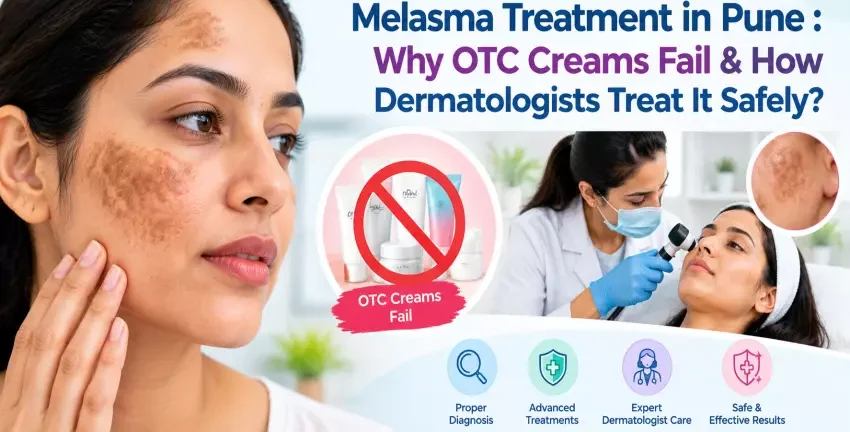
Melasma is a common skin pigmentation concern that can cause stubborn brown or grey patches on the face. Melasma Treatment in Pune requires a personalised approach, as over-the-counter (OTC) creams and brightening products may not deliver effective results when used alone. A dermatologist can identify the underlying cause and recommend suitable treatment to manage pigmentation safely.
Have you tried brightening creams, vitamin C serums, or home remedies, only to see the brown patches on your cheeks and forehead return? Stubborn melasma can be frustrating because it often improves slowly and may become darker again with sun exposure or hormonal changes.
Understanding why melasma persists and how dermatologists approach it can help you avoid irritating products and choose a safer, more personalised treatment plan.
What Is Melasma and Why Is It So Difficult to Treat?
Melasma is a pigmentation disorder that causes brown or grey-brown patches, usually on the cheeks, forehead, upper lip, nose, or chin. It develops when pigment-producing cells called melanocytes become overactive and produce excess melanin.
Common Triggers of Melasma:
Several factors can contribute to melasma or make existing patches more noticeable:
- Sunlight and ultraviolet radiation: Exposure can stimulate pigment production and darken existing patches.
- Visible light: Certain wavelengths of visible light may worsen pigmentation, particularly in darker skin tones.
- Hormonal changes: Pregnancy and some hormonal medications can contribute to melasma.
- Genetic susceptibility: Some people are more likely to develop this condition.
- Skin irritation: Harsh products and aggressive procedures may trigger inflammation and worsen pigmentation.
If you experience recurring redness, itching, or irritation, consult a dermatologist and explore Skin Allergy Treatment in Pune
Melasma can persist for years and may recur even after improvement. That is why treatment generally focuses on controlling pigmentation and preventing flare-ups rather than promising a permanent cure.
Why OTC Creams Often Fail to Control Stubborn Melasma?
OTC products are widely available and can be useful for general skincare. However, melasma is a complex condition, and a brightening cream alone may not address all the factors contributing to persistent pigmentation.
Patients looking to improve uneven skin tone can explore Skin Brightening Treatment in Pune for dermatologist-guided treatment options
The Product May Not Match Your Type of Pigmentation:
Not every brown patch is melasma. Sunspots, post-inflammatory hyperpigmentation after acne, and other pigmentary conditions can look similar but may need different treatment approaches. Using a product without identifying the cause can delay appropriate care. A dermatologist can examine the affected areas and determine whether the pigmentation is consistent with melasma or another condition.
OTC Ingredients May Provide Only Limited Improvement:
Ingredients such as vitamin C, niacinamide, azelaic acid, and kojic acid may help improve uneven skin tone in selected patients. However, their effectiveness depends on the formulation, concentration, regular use, skin tolerance, and type of pigmentation. Some people may notice gradual improvement, while others need prescription treatment or a combination of approaches. The American Academy of Dermatology explains that melasma treatment often combines sun protection with topical medication and, in selected cases, procedures.
Sun Exposure Can Undermine Your Skincare Routine:
Even a well-chosen product may produce disappointing results if your skin continues to receive substantial sun exposure without protection. Daily photoprotection is essential for managing melasma. Broad-spectrum sunscreen with SPF 30 or higher, regular reapplication, shade, and protective clothing can help reduce further darkening. Tinted sunscreen containing iron oxides may provide additional protection against visible light.
Irritating Products Can Make Pigmentation Worse:
Using multiple exfoliating acids, harsh scrubs, strong peeling products, or unregulated skin-lightening creams can irritate the skin. Inflammation may lead to additional pigmentation, especially in skin that is prone to post-inflammatory hyperpigmentation. Stop using products that cause persistent burning, redness, or stinging and seek medical advice if the irritation continues. Avoid using prescription-strength lightening medicines or steroid-containing combination creams without appropriate medical supervision.
How Dermatologists Diagnose and Treat Melasma Safely?
Effective Melasma Treatment in Pune starts with an accurate diagnosis and an assessment of your skin type, medical history, triggers, and previous treatments.
A dermatologist may examine your skin visually and, when appropriate, use a dermatoscope or Wood’s lamp to assess pigmentation. Treatment is then tailored to your individual need
According to the American Academy of Dermatology’s melasma treatment guide, treatment should be personalised according to individual skin conditions.
1. Prescription Topical Treatments:
A dermatologist may recommend prescription creams to reduce excess pigmentation. Depending on the case, these may include:
- Hydroquinone: A pigment-reducing medicine used under medical guidance.
- Tretinoin-based formulations: May help improve skin-cell turnover and support pigmentation treatment.
- Combination creams: Certain prescribed combinations contain multiple active ingredients to address pigmentation through different mechanisms.
- Alternative topical agents: Azelaic acid and other suitable ingredients may be considered depending on skin tolerance and treatment goals.
These treatments are not interchangeable, and stronger formulations are not automatically better. The choice, frequency, and duration of treatment should be determined by a qualified clinician.
2. Consistent Sunscreen and Skin Barrier Care:
Sun protection is a core part of melasma management, not an optional addition to treatment.
A practical routine may include:
- Applying broad-spectrum SPF 30 or higher sunscreen every day.
- Reapplying sunscreen at least every two hours while outdoors, and after swimming or sweating.
- Consider a tinted sunscreen containing iron oxides.
- Wearing a wide-brimmed hat and seeking shade when possible.
- Using gentle cleansers and moisturisers to reduce irritation.
A simple, consistent routine is often more helpful than frequently changing products or layering multiple strong activities.
3. Chemical Peels for Selected Patients:
Dermatologist-performed chemical peels may be considered when topical treatment and sun protection do not provide sufficient improvement.
The peel type and strength must be selected according to the patient’s skin condition and risk of irritation. Aggressive peeling can cause inflammation and worsen pigmentation, so treatment should not be chosen solely for its intensity.
4. Laser and Light-Based Procedures:
Certain laser or light-based procedures may be considered for carefully selected patients. However, they are not suitable for every case of melasma.
Some procedures can aggravate pigmentation or lead to recurrence, particularly when treatment settings, skin preparation, or aftercare are inappropriate. A dermatologist should explain the expected benefits, risks, alternatives, and maintenance requirements before recommending a procedure.
5. Additional Treatments for Resistant Melasma:
When melasma remains difficult to control, a dermatologist may consider additional options, including selected topical or oral medicines.
Oral tranexamic acid is sometimes used off-label for melasma in appropriate patients. It is not suitable for everyone and requires careful medical screening because of potential risks, including blood clots. Do not start oral tranexamic acid or other prescription medicines on your own.
Melasma Treatment Options at a Glance:
There is no single treatment that works best for everyone. A combination of approaches may be appropriate depending on the severity of melasma, skin tolerance, and previous response.
How Long Does Melasma Treatment Take?
Melasma generally improves gradually rather than overnight. Some people notice changes after several weeks, while more persistent pigmentation may require months of consistent treatment. The American Academy of Dermatology notes that treatment commonly takes around three to twelve months, and longer-standing melasma may take more time.
Even after improvement, maintenance treatment and ongoing sun protection may be needed because pigmentation can return. Avoid judging treatment success after only a few days or increasing product strength without medical advice.
When Should You Consult a Dermatologist?
Consider a professional assessment if:
- Your facial pigmentation persists despite consistent skincare.
- Brown patches repeatedly return after temporary improvement.
- Products cause burning, redness, peeling, or increased darkening.
- You are unsure whether the patches are melasma or another condition.
- You are considering prescription creams, chemical peels, or laser procedures.
For personalised guidance, explore Pigmentation Treatment in Pune with Dr. Ruchi Bhirud. A consultation can help establish the likely cause of pigmentation and identify suitable treatment options.
Conclusion: Treat Melasma With a Plan, Not Just Another Cream
Stubborn melasma can be challenging, but repeatedly switching brightening products is not always the answer. The condition often requires accurate diagnosis, appropriate topical treatment, consistent sun protection, and careful consideration of procedures when necessary.
A personalised approach helps reduce unnecessary irritation and sets realistic expectations about improvement and recurrence.
For guidance on Melasma Treatment in Pune, visit Dr. Ruchi Bhirud’s website or call +91 9766970697 to enquire about a consultation.
👉 Why does melasma return after using a cream?
Melasma can recur because sunlight, visible light, hormonal influences, and other triggers continue to stimulate pigmentation. Maintenance care and sun protection are important even after improvement.
Frequently Asked Questions About Stubborn Melasma:
👉 Are OTC creams completely ineffective for melasma?
No. Some OTC ingredients can support pigmentation management, but results vary. Stubborn melasma may require prescription treatment and, in selected cases, dermatologist-performed procedures.
👉 Is laser treatment always the best solution for melasma?
No. Laser treatment is not appropriate for every patient and can sometimes worsen pigmentation. A dermatologist should assess the skin and consider safer or more suitable options before recommending a procedure.
👉 Can melasma be permanently cured?
There is no guaranteed permanent cure. Many patients can achieve meaningful improvement, but recurrence is possible. Long-term maintenance and sun protection help manage the condition.
👉 Which sunscreen is suitable for melasma-prone skin?
A broad-spectrum sunscreen with SPF 30 or higher is a useful starting point. A tinted formulation containing iron oxides may offer additional protection against visible light. The best product is one that suits your skin and can be applied consistently.