
Consult an Experienced Skin Allergy Specialist in Pune for Lasting Relief
Struggling with sudden skin rashes, persistent hives, redness, or intense itching? Seeking professional skin allergy treatment in Pune helps you identify hidden triggers and restore healthy, comfortable skin. Dr. Ruchi Bhirud – Dermatologist in Pune provides expert dermatological care and evidence-based allergy management tailored to sensitive Indian skin types, practicing in Pashan, Pune.
- 10+ Years of Specialized Dermatological Experience
- Experienced Skin Allergy Doctor in Pune
- Comprehensive Diagnostics
- High Success Rate
- 5,000+ Patients Consulted
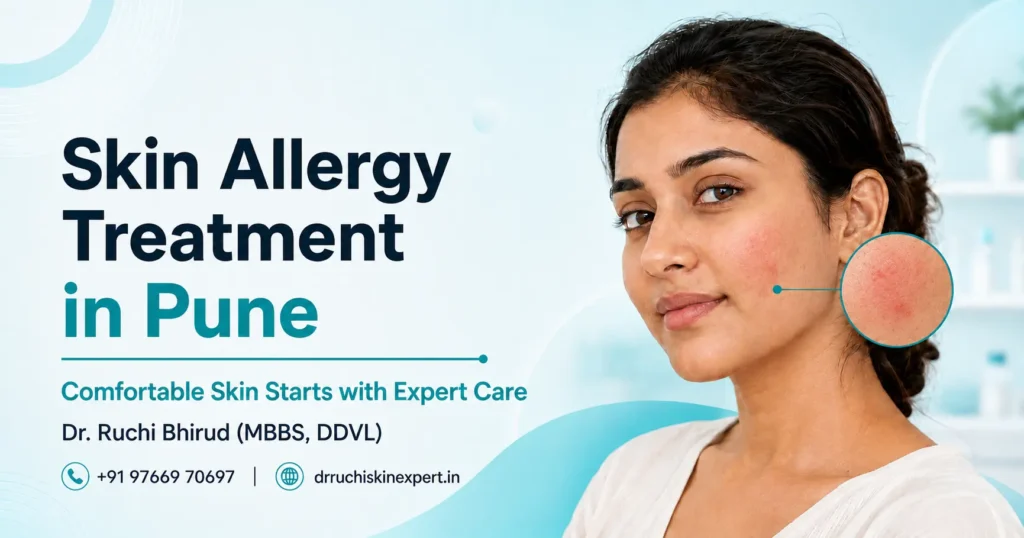
Overview of Skin Allergies & Common Triggers:
A skin allergy occurs when your immune system overreacts to a normally harmless substance, releasing histamines that cause inflammation, swelling, and itching.
Primary Categories of Skin Allergens:
- Contact & Environmental Allergens: Pollen, dust mites, pet dander, harsh soaps, cosmetics, artificial fragrances, hair dyes (PPD), and metals like nickel.
- Dietary & Ingested Triggers: Certain foods, food preservatives, or additives that trigger sudden hives or systemic skin reactions.
- Medication-Induced Reactions: Specific oral or topical drugs that cause acute skin eruptions or photosensitivity.
Common Conditions Treated by a Skin Allergy Doctor in Pune:
Consulting a qualified skin allergy doctor in Pune ensures an accurate diagnosis rather than relying on self-medication or temporary anti-itch creams.
Key Conditions We Treat:
- Urticaria (Hives & Angioedema): Sudden, raised, intensely itchy red welts on the skin that appear unexpectedly.
- Contact Dermatitis: Localized skin inflammation caused by direct physical contact with an irritant or allergen.
- Atopic Dermatitis & Eczema: Chronic skin conditions marked by dry, scaly, itchy patches and skin barrier dysfunction, with personalized Eczema Treatment
- Photoallergic Reactions: Skin rashes triggered by sun exposure combined with specific skincare products or medications.
- Drug Eruptions: Acute skin rashes resulting from adverse reactions to systemic medications.
Comprehensive Diagnostics by a Skin Allergy Specialist in Pune:
Effective skin allergy treatment in Pune begins with pinpointing the exact root cause rather than just masking symptoms.
- Detailed Clinical Assessment: Ruchi Bhirud evaluates your medical history, onset of symptoms, daily routine, and environmental exposures.
- Skin Patch Testing: A specialized diagnostic method to identify contact allergens responsible for allergic contact dermatitis.
- IgE Blood Screening: Targeted laboratory blood tests to measure specific antibody levels against environmental or food triggers.
- Diagnostic Skin Biopsy: Performed in rare, complex, or persistent cases to rule out underlying dermatological disorders.
Step-by-Step Protocol for Skin Allergy Treatment in Pune:
Our structured approach to skin allergy treatment in Pune focuses on fast symptom relief alongside long-term prevention.
Step 1: Immediate Symptom Control:
Prescribing targeted antihistamines and mild anti-inflammatory topical formulations to quickly calm intense itching, redness, and swelling.
Step 2: Trigger Identification & Elimination:
Using diagnostic testing results to help you systematically eliminate specific chemical, dietary, or environmental allergens from your lifestyle.
Step 3: Skin Barrier Restoration:
Applying medical-grade lipid and ceramide-rich emollients to repair damaged outer skin layers, preventing further irritant penetration.
Step 4: Long-Term Preventive Guidance:
Creating a personalized skincare regimen and preventive plan to keep chronic skin allergy flares under control.
Why Consult Dr. Ruchi Bhirud as Your Skin Allergy Specialist in Pune?
When searching for the best dermatologist for skin allergy in Pune, choosing an experienced clinician ensures safe and lasting results.
- Board-Certified Dermatological Care: In-depth experience in diagnosing complex acute and chronic skin hypersensitivity conditions.
- Root-Cause Focus: Prioritizes identifying underlying triggers over temporary symptom suppression.
- Tailored for Indian Skin: Formulations and medical guidance customized specifically for regional environmental conditions and skin profiles.
- Accessible Location: Practicing in Pashan and serving patients across Pune, including Baner, Aundh, Wakad, and PCMC.
Skin Allergy Consultation Cost in Pune:
Understanding the fees associated with skin allergy treatment in Pune helps you plan your medical care effectively.
Schedule Your Consultation in Pashan, Pune Today
If you are also dealing with ongoing facial skin concerns alongside sensitive skin issues, explore our specialized services such as active acne treatment in Pune to prevent unwanted breakouts. For post-inflammatory dark spots left behind by past rashes or breakouts, learn how chemical peels for dark marks, hydrafacial treatment in Pune, or laser skin resurfacing can restore an even, radiant complex.
- Consultation Location: B-20, 2nd Floor, Ratan Krupa Apartment, Sai Chowk, Pashan-Sus, Baner – Pashan Link Rd, Pashan, Pune, Maharashtra 411021
- Key Services: Comprehensive Allergy Diagnostics, Patch Testing, Urticaria Management, Barrier Repair Therapy
- Book Your Slot: Schedule your consultation with Dr. Ruchi Bhirud today for personalized skin allergy treatment in Pune.
FAQs About Skin Allergy Treatment in Pune
👉 When should you consult a skin allergy doctor in Pune?
You should consult a specialist if your skin rash persists for more than 48 hours, is accompanied by severe itching, spreads rapidly, or recurs frequently despite using basic moisturizing creams.
👉 Which doctor to consult for allergy—a dermatologist or pulmonologist?
If your allergy symptoms manifest on the skin as rashes, hives, itching, or eczema, you should consult a dermatologist. If your symptoms involve respiratory issues like wheezing, persistent sneezing, or asthma, a pulmonologist or general allergist is recommended.
👉 Is an allergy test in Pune mandatory before starting skin allergy treatment in Pune?
Not always. Mild or acute skin reactions often respond well to immediate medical therapy. However, for chronic, unexplained, or recurrent rashes, an allergy test Pune (such as a patch test or IgE panel) is highly recommended to pinpoint exact triggers.
👉 Are skin allergies contagious?
No. Skin allergies are internal immune responses to specific triggers and cannot be transmitted from person to person through contact.
EXCELLENT Based on 23 reviews
 Posted on Google
 Yogesh Phalak08/06/2026Very good facility and knowledge on the subject Handled our case very effectivelyPosted on Google
 Lokesh Mahajan02/06/2026Excellent clinic for advanced skin and hair treatments. I underwent both PRP and skin treatments here and noticed significant improvement. The doctor is highly knowledgeable, professional, and caring. The overall experience was very satisfying, and I would highly recommend this clinic to anyone seeking effective skin and hair care solutions.Posted on Google
 pushkar khachane30/05/2026Dr. Ruchi Bhirud explained everything clearly and suggested the right treatment for my pigmentation. Happy with the results